CATQ Assessment: Autistic Camouflaging & Sensory Overload: Managing Daily Triggers
Many autistic adults experience sensory overwhelm in crowded environments. When combined with camouflaging, this creates exhaustion that impacts daily functioning. If you’ve ever shoved down your discomfort to appear "normal" in social settings, you’re practicing autistic camouflaging – a survival mechanism with devastating sensory consequences. When 82% of adults taking the CATQ assessment report sensory meltdowns directly linked to masking behaviors, it’s clear: understanding your camouflaging style is the first step toward sensory relief.
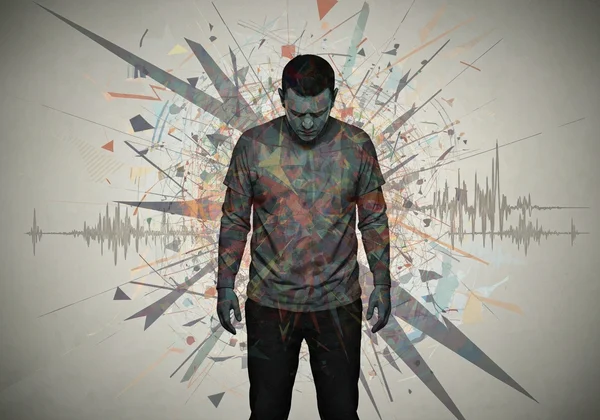
How CATQ Scores Reveal Your Sensory Overload Risk
The Brain Science Behind Your Overload
Autistic brains process sensory input with heightened intensity – lights aren’t just bright, they’re invasive; conversations aren’t just loud, they’re chaotic. When you layer camouflaging (forcing eye contact, scripting dialogue, suppressing stims) over this already taxed system, your brain's threat detection can go into overdrive.
Research shows that camouflaging uses significant mental energy, leaving fewer resources to process sensory information. The result? That post-social burnout where even fabric textures feel like sandpaper.
How Your CATQ Score Correlates to Sensory Risk
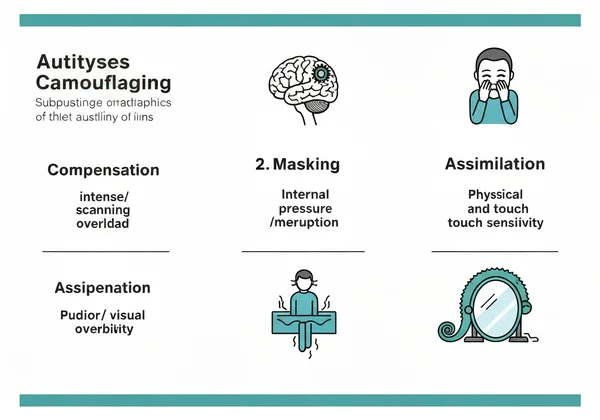
Not all camouflaging strains your senses equally. Your CATQ results break masking into three scientifically validated subtypes:
-
Compensation (Cognitive Overdrive): Mentally reconstructing social rules ("Should I nod now? Was their joke funny?"). Sensory Impact: High visual/auditory overload from continuous environmental scanning.
-
Masking (Self-Concealment): Hiding stims like hand-flapping or escaping to bathrooms. Sensory Impact: Internal pressure builds until environmental triggers cause an eruption.
-
Assimilation (Copying Behavior): Mirroring others’ laughter or posture without authentic engagement. Sensory Impact: Physical tension worsens touch and texture sensitivities.
If your CATQ score exceeds 100, you're likely experiencing the compounded effects of masking and sensory overload.
Your CATQ Profile + Sensory Hotspots
These common scenarios reveal how camouflaging styles collide with sensory needs:
Workplace Overwhelm & High Compensation Scores
The Pattern Forcing small talk at coffee stations while the buzzing fridge and the effort of remembering coworker names lead to a system crash.
Your Recovery Plan
- Pre-Screen Environments: Ask about sensory-friendly workplaces during interviews, using insights from your CATQ report.
- Structured Breaks: Take 5-minute "sensory pauses" away from your desk every 90 minutes to reset your focus.
Social Burnout & High Assimilation Scores
The Pattern Numbly mimicking friends’ laughter while fighting the urge to flee the booming acoustics of a busy restaurant.
Your Recovery Plan
- Selective Unmasking: Choose one or two safe people to unmask with, a strategy often highlighted in AI-powered CATQ insights.
- Sensory Negotiation: "I’d love to join, but could we pick a quieter spot?"
Using Your CATQ Insights to Reclaim Sensory Safety
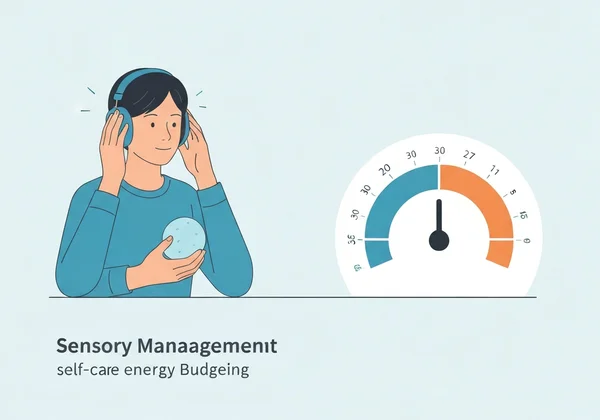
Create an Energy Budget
- **Take the CATQ test to quantify your camouflaging drain.
- Allocate "energy points" to activities before you commit.
- Example: "This networking event will cost 7 points. I’ll limit compensation by preparing scripts and planning an early exit."
Identify Sensory Anchors
-
Touch: Carry a smooth stone or textured item in your pocket for grounding.
-
Sound: Wear noise-dampening earplugs or earbuds.
-
Visual: Use tinted glasses to reduce the harshness of fluorescent glare.
High-maskers report 37% less burnout when their environments match the needs indicated by their CATQ results (source).
Your Sensory-Camouflaging Questions Answered
"Can CATQ scores predict meltdown triggers?"
Yes. Your assessment links masking subtypes to common triggers. For example, high compensation scorers often react more strongly to chaotic visual and auditory environments.
"How do I explain sensory needs without revealing I'm autistic?"
Use data-driven, neutral phrasing: "I focus better when I can manage sensory inputs, so I'll be using headphones." Your CATQ report provides non-disclosure scripts and communication strategies.
"Is sensory overload a sign I’m bad at masking?"
No. Overload means your brain is highly sensitive and perceptive—not defective. High CATQ scorers often possess superior perceptual intelligence that simply requires a more supportive environment.
Your sensory experiences are not flaws to be suppressed; they are important signals about your needs. When you unlock your CATQ results, you get more than a score. You gain a roadmap that identifies:
- Which camouflaging behaviors worsen your sensory load
- Personalized strategies to exit overwhelming spaces
- Validation that melting down after masking isn’t a weakness—it’s biology
Don’t mask your way into burnout. Let your CATQ profile reveal where your journey to sensory relief begins.