CATQ AI Analysis: Transforming Your Results into Personalized Insights
You've completed the Camouflaging Autistic Traits Questionnaire (CATQ) and now you have your scores. You see the numbers for Compensation, Masking, and Assimilation. But what do these numbers really mean for your daily life? For many, seeing the scores is just the beginning of a much deeper journey into self-understanding.
Raw numbers can confirm your feelings, but they don't always explain the why or the how. They don't tell the full story of your unique experiences, challenges, and strengths. This is where a new layer of technology comes in. The optional AI-powered analysis at CATQ.org acts as a bridge, transforming your scores from abstract data into a personalized roadmap for self-knowledge. It’s designed to help you connect the dots between your results and your real-world experiences. Ready to see what’s beyond the numbers? You can start your test today.
This article explores how the innovative CATQ AI analysis turns your questionnaire responses into actionable, personal insights, helping you move from awareness to authentic living.
The Science Behind CATQ AI Analysis
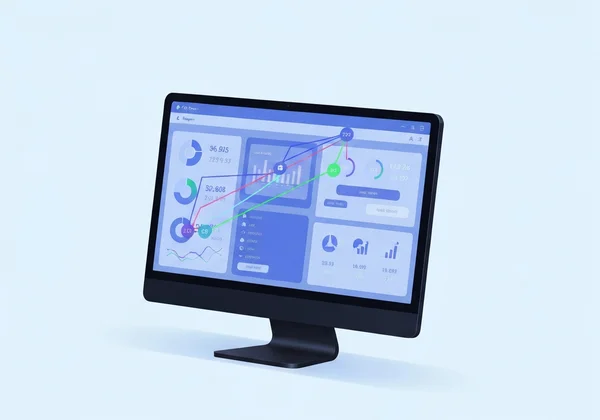
People often wonder how AI can deliver meaningful insights into something as personal as neurodiversity. This curiosity is completely understandable. Our approach is built on a foundation of scientific rigor and a deep respect for the original research, ensuring that the analysis is both innovative and trustworthy. We aim to enhance, not replace, the validated framework of the CATQ.
How Our AI Extends Hull's Original Research Framework
The original CATQ, developed by Hull et al. (2018), is a scientifically validated tool for measuring autistic camouflaging. It brilliantly categorizes camouflaging into three key areas: Compensation, Masking, and Assimilation. Our AI doesn't change this core structure. Instead, it builds upon it. The AI is trained on a vast and anonymized dataset to recognize subtle patterns within your specific answers—patterns that go beyond the simple subscale scores. It looks at the interplay between your responses to different questions, providing a more nuanced picture of your individual camouflaging style.
Validating AI Accuracy Against Clinical Diagnoses
To ensure our AI provides helpful and relevant insights, its development involved a rigorous validation process. The patterns and interpretations generated by the AI were cross-referenced with established clinical knowledge and the lived experiences of autistic individuals. While the AI report is not a diagnosis, this process ensures that the insights it provides align with the real-world challenges and strengths commonly associated with different camouflaging profiles. It helps make the abstract concept of camouflaging tangible and relatable.
The Three-Layer Analysis Approach: Scores, Patterns, and Context
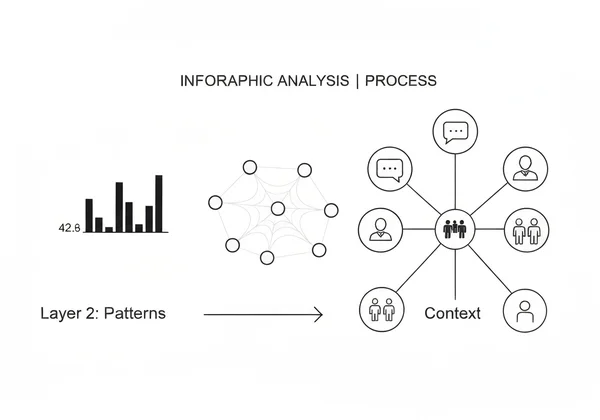
Our AI analysis works on three distinct layers to build your personalized report:
-
Scores: It starts with your foundational CATQ scores, just like the standard results. This provides the baseline measurement of your overall camouflaging and its three components.
-
Patterns: The AI then analyzes how your answers create unique patterns. For example, do you score highly on masking social anxiety but low on imitating others? This reveals your specific strategies.
-
Context: Finally, it contextualizes these patterns, offering insights into how they might manifest in everyday situations like work meetings, social gatherings, or close relationships. This is where data becomes a story—your story.
Transforming Your CATQ Scores into Personalized Insights
A standard score might tell you that you engage in "masking," but what does that look like for you? The goal of the AI analysis is to answer that very question. It moves beyond generic definitions to offer a detailed portrait of your personal experience, helping you understand not just that you camouflage, but how, why, and what you can do about it.
From Compensation, Masking, and Assimilation Scores to Behavioral Patterns
Your report doesn't just restate your scores. It translates them. For instance, a high "Compensation" score isn't just a number; the AI might identify it as a pattern of meticulously pre-planning social scripts or using logic to navigate emotional conversations. A high "Masking" score could be linked to specific behaviors like forcing eye contact despite discomfort or suppressing natural body movements (stimming). This level of detail makes your results far more practical and understandable.
Identifying Your Unique Camouflaging Triggers and Strategies
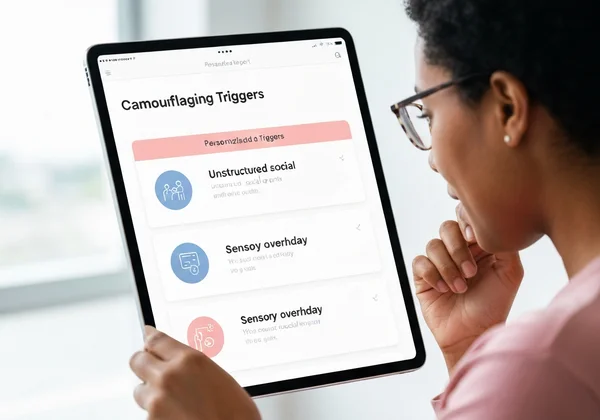
What situations drain your energy the most? The AI analysis helps pinpoint potential triggers. By examining your responses, it can suggest which environments or social demands are likely to increase your need to camouflage. It might highlight that unstructured social events are more taxing for you than formal, role-based interactions. Understanding these triggers is the first step toward managing your energy and reducing burnout. The path to this understanding begins when you try our free tool and explore your results.
How Your Responses Reveal Hidden Strengths in Neurodiversity
Camouflaging isn't just about challenges; the strategies you've developed often come with hidden strengths. Your high compensation score might mean you are an exceptional planner and problem-solver. Your masking efforts may have made you a highly observant and empathetic person. The AI report is designed to highlight these positive traits, reframing your neurodivergent experience as one that includes unique talents and capabilities, empowering you with a more balanced self-view.
Real Examples: AI Analysis in Action
To make the benefits of AI analysis clearer, let's look at some anonymized examples based on common user profiles. These case studies show how the report can provide a crucial "aha!" moment, connecting long-standing difficulties to the concept of autistic camouflaging and offering a path forward.
Case Study 1: The Professional Who Discovered Her Burnout Was Autistic Overload
A marketing manager felt constantly exhausted and on the verge of burnout, despite loving her job. Her standard CATQ scores showed high levels of Compensation and Masking. The AI analysis went deeper, linking her high scores to specific workplace behaviors: constantly monitoring her facial expressions in meetings, forcing herself to engage in small talk, and spending hours preparing for every social interaction. The report identified this not just as job stress, but as autistic overload from sustained camouflaging. This insight helped her implement changes, like scheduling quiet time after meetings, to preserve her energy.
Case Study 2: How AI Analysis Uncovered Masking Patterns Across Life Domains
A student felt like a different person depending on who he was with—friends, family, or professors. He couldn't understand why he felt so inauthentic. His AI report highlighted inconsistent patterns in his masking strategies. It showed he used assimilation heavily with friends (adopting their slang and interests) but relied on intense compensation with professors (memorizing facts to appear knowledgeable). Seeing this pattern laid out helped him realize the immense energy he was spending to maintain multiple personas, which was a major source of his anxiety.
Before and After: Applying AI Insights to Reduce Daily Fatigue
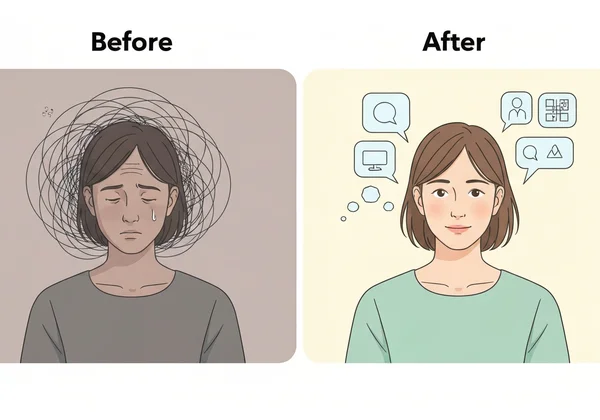
Before taking the test, many users simply describe themselves as "always tired" or "socially awkward." After receiving their AI-powered insights, they have the language and understanding to change their situation. For example, a user who learned their fatigue was linked to masking auditory sensitivity could start using noise-canceling headphones. Someone who discovered their anxiety stemmed from trying to imitate social norms could give themselves permission to be more authentic in safe environments. These small, informed changes can lead to a significant reduction in daily fatigue and a greater sense of well-being.
Beyond the Report: Using AI Insights for Authentic Living
Receiving your AI-generated report is a powerful moment of discovery, but its true value lies in how you use it. The insights are designed to be a practical tool for creating a life that feels less like a performance and more like an authentic expression of who you are. The goal is to empower you to make conscious choices that support your mental health and well-being.
Creating Your Personalized Anti-Burnout Strategy Based on AI Recommendations
Your report provides specific insights into what drains your energy. Use this information to create a personalized anti-burnout plan. If the AI highlights that unstructured social events are a major trigger, your strategy might involve limiting these events or setting a strict time limit for how long you stay. If it points to sensory overload, your plan could include creating a low-sensory space at home to recharge. The report gives you the data you need to build effective, personalized self-care routines.
Communicating Your Findings to Healthcare Providers and Supporters
Explaining the feeling of being "different" to a therapist, doctor, or loved one can be incredibly difficult. Your AI report provides a structured, objective summary of your experiences. You can use it as a starting point for conversations, helping others understand your internal world more clearly. It gives you a shared language to discuss concepts like masking and burnout, making it easier to ask for the support you need.
Tracking Progress: Using AI Insights as a Baseline for Growth
Your initial report is a snapshot in time. It provides a baseline understanding of your camouflaging patterns. As you begin to unmask and live more authentically, these patterns may change. You can use your report as a reference point to track your growth. Are you relying less on exhausting compensation strategies? Do you feel less pressure to assimilate? This journey of self-discovery is ongoing, and the insights from the CATQ online test can be your guide.
Your Next Steps in the Journey of Self-Discovery
What makes your CATQ scores truly valuable isn't the numbers themselves, but how they open the door to understanding your unique way of being in the world. The optional AI analysis transforms this data into a rich, personalized narrative that highlights your unique behavioral patterns, triggers, and even your hidden strengths.
This deeper insight is the key to moving beyond the exhaustion of camouflaging. It empowers you to build practical strategies for reducing burnout, communicating your needs effectively, and finally embracing a more authentic way of living. Self-knowledge is the first and most critical step toward a life with less stress and more genuine connection.
Ready to see how your CATQ scores can be transformed into personalized insights? Take the free assessment today and optionally unlock your AI-generated report to begin your journey toward authentic living.
The Takeaway
Is the AI analysis as reliable as speaking with a human specialist?
Think of our AI analysis as a knowledgeable companion that helps make sense of your answers by identifying patterns and connections you might not notice on your own. However, it is not a substitute for a conversation with a qualified human specialist, such as a psychologist or therapist. It can be an excellent resource to bring into a session with a professional to guide your discussion, but it does not provide a medical diagnosis or therapeutic advice.
How does the AI protect my privacy while analyzing my responses?
Protecting your privacy and data security is our highest priority. We process all data with strict anonymity protocols. Your personal information is never required, and your responses are analyzed without being linked to your identity. We are committed to providing a safe and secure environment for your self-exploration.
Can the AI analysis replace a professional autism diagnosis?
No, absolutely not. The CATQ test and its AI analysis are informational tools for self-discovery, not diagnostic instruments. A formal autism diagnosis can only come from a qualified healthcare professional. However, your CATQ report serves as a valuable reference to help professionals better understand your unique experiences. You can start your CATQ assessment to gather insights for your journey.
What kind of personalized recommendations will I receive in my AI report?
The AI report provides insights and suggestions, not medical recommendations. It will highlight your specific camouflaging patterns and explain how they might impact you in daily life. For example, it might suggest areas where you could conserve energy (e.g., "Your pattern of high masking in group settings may be a major source of fatigue") and identify strengths (e.g., "Your compensation strategies suggest strong analytical and planning skills"). These insights are intended to empower you to make your own informed choices.